
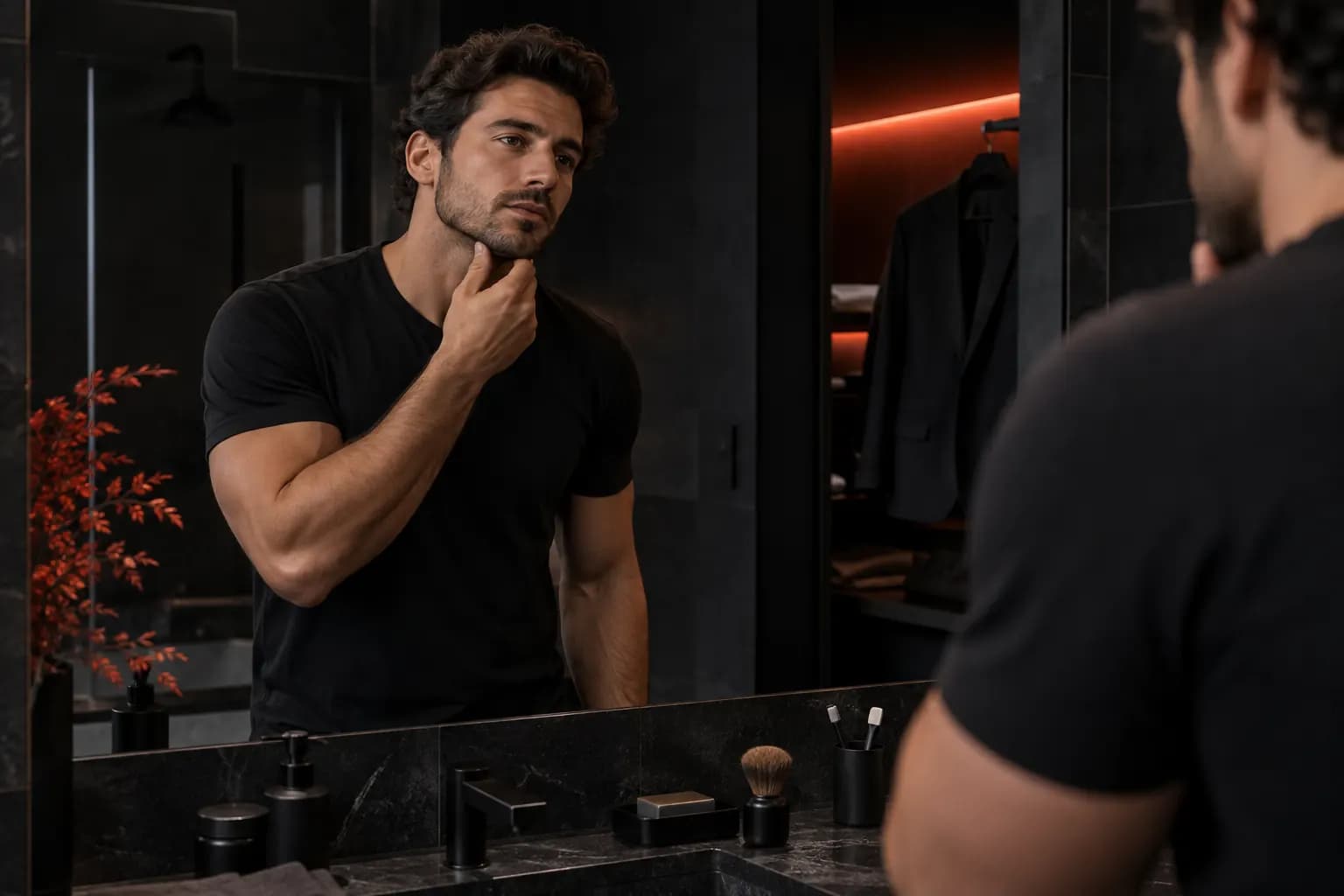
Looksmaxxing means deliberately trying to improve your physical appearance to become as attractive as possible. It can include ordinary things such as skincare, a better haircut, exercise, grooming, clothing and dental care, but the term is also used for more extreme cosmetic or medical changes.
What does looksmaxxing mean?
Looks + maxxing = maximizing your looks.
The Cambridge Dictionary defines looksmaxxing as the activity of making yourself as physically attractive as possible. The word is internet slang, but by 2026 it has moved beyond niche forums and into mainstream dictionaries, social media and medical discussion.
The important part is that looksmaxxing is not one specific routine or treatment. It is an umbrella term covering everything from getting a flattering haircut to pursuing cosmetic surgery.
Looksmaxxing at a glance
| Question | Short answer |
|---|---|
| What is looksmaxxing? | Deliberately improving your physical appearance to maximize attractiveness. |
| Who does it? | Anyone can looksmaxx, although the online culture is especially popular among boys and young men. |
| What does it look like? | Skincare, hair care, fitness, grooming, style, posture, dental care and sometimes cosmetic procedures. |
| What is softmaxxing? | Lower-risk, usually non-invasive appearance improvements. |
| What is hardmaxxing? | More invasive, permanent or medically significant attempts to alter appearance. |
| Is it a medical system? | No. It is an internet term, not a medical discipline. |
| Does every method work? | No. Some are evidence-based grooming or health practices; others are exaggerated, unsupported or dangerous. |
| Correct spelling? | Looksmaxxing is the spelling used by major dictionaries. |
A practical definition
Looksmaxxing is the intentional effort to improve the parts of your appearance you can influence. That may involve improving skin, choosing a better hairstyle, grooming facial hair, exercising, changing body composition, improving posture, wearing better-fitting clothes, choosing glasses that suit your face, improving sleep, using cosmetics or considering professional treatment.
Two people saying they are “looksmaxxing” may be doing completely different things. One may have started using sunscreen, fixed their haircut and bought clothes that fit. Another may analyze facial proportions and be considering cosmetic procedures.
Michigan Medicine describes the trend as being built around maximizing physical attractiveness, while noting that it ranges from ordinary skincare, exercise and grooming to much more extreme practices.
Looksmaxing or looksmaxxing?
Looksmaxxing is the standard spelling. You will also see “looksmaxing,” “looks maxxing,” “looksmax” and “looksmaxxer,” but the spelling with two x’s is the form used by major dictionaries. “Looksmaxing” is best treated as a common spelling variant.
Where did looksmaxxing come from?
Trying to look better is not new. The term looksmaxxing is. It developed in male-dominated internet communities during the 2010s, particularly forums discussing attractiveness, dating, lookism and male appearance.
By the early 2020s, the idea had moved into mainstream social media and its meaning broadened. A term once tied closely to niche forums could now describe starting a skincare routine, getting into the gym, finding a more flattering haircut, growing or shaping a beard, or dressing better.
That broader meaning matters. Not everyone using the word is participating in the original subculture.
What does looksmaxxing look like?
There is no official checklist. Most practices fit into a few broad areas:
A lot of looksmaxxing is simply grooming and appearance management with a new internet name. The problem is that online communities mix ordinary improvements with claims that are much less credible.
| Area | Common examples |
|---|---|
| Skin | Cleansing, sunscreen, acne treatment, moisturizer and skincare actives |
| Hair | Haircuts, styling, scalp care and addressing hair loss |
| Facial hair | Beard growth, trimming, shaping or clean shaving |
| Teeth | Dental hygiene, whitening and appropriate orthodontic treatment |
| Body | Resistance training, fitness and body composition |
| Jaw & posture | Posture, beard styling and reducing facial puffiness |
| Style | Better clothing fit, proportions, colors and accessories |
| Eyes & brows | Eyebrow grooming, glasses and reducing a tired appearance |
| General appearance | Sleep, hygiene, grooming and presentation |
| Cosmetic procedures | Professionally performed treatments or surgery |
Softmaxxing vs hardmaxxing
These are internet terms, not medical categories. Softmaxxing usually means lower-risk, non-invasive changes such as skincare, haircuts, grooming, exercise, clothing, posture, sleep and makeup. Cleveland Clinic’s looksmaxxing guide describes similar practical changes when explaining the softer end of the trend.
Hardmaxxing generally refers to more invasive or permanent appearance changes, including cosmetic surgery, hair transplantation, orthodontic or maxillofacial treatment, and injectable procedures.
A medically appropriate procedure performed by a qualified professional is not automatically dangerous because an online community calls it “hardmaxxing.” The risk comes when people self-diagnose, use unapproved substances, follow extreme diets, attempt DIY procedures, injure themselves or pursue unnecessary procedures because of obsessive appearance concerns.
| Softmaxxing | Hardmaxxing | |
|---|---|---|
| Typical approach | Grooming and lifestyle | Medical or structural change |
| Examples | Skincare, haircut, fitness and clothing | Surgery, implants and some cosmetic procedures |
| Usually reversible? | Mostly | Often not |
| Typical risk | Lower | Higher |
| Medical supervision? | Usually no | Often yes |
| Good starting point? | Generally yes | Not without an individual reason and professional advice |
Are looksmaxxing results real?
Some are. Some are not. The label groups together methods with completely different levels of evidence. A good haircut can change how a face is framed. Treating acne can improve the skin. Resistance training can change body composition. Proper dental treatment can change a smile. Clothing fit can change how proportions appear.
That does not mean every claim found on TikTok, Reddit, YouTube or forums is real. Claims that DIY methods can dramatically remodel adult facial bones deserve particular skepticism. Michigan Medicine specifically warns against “bone smashing,” which involves deliberately injuring the face, because it does not produce the promised effect and can cause harm.
Do not ask whether “looksmaxxing” works. Ask whether this specific method is supported by evidence and whether the expected change is realistic.
Why has it become so popular?
Looksmaxxing combines before-and-after transformations, attractiveness ratings, actionable tips, fitness, skincare, male self-improvement, dating advice, facial analysis and optimization culture. It also turns appearance into something that feels measurable through proportions, body-fat levels, symmetry, scales and tiers.
The social-media environment matters
Pew Research Center’s 2025 teen survey found that 94% of teen boys used YouTube, 21% used Reddit, and roughly one in five U.S. teens used YouTube or TikTok almost constantly. These numbers do not measure looksmaxxing itself, but they help explain how visual self-improvement trends spread so quickly among young audiences.
The American Psychological Association’s discussion of male body dysmorphia also examines how social media and appearance-focused content can affect boys’ and men’s body image. Caring about appearance is not automatically unhealthy, but there is a difference between improving something realistic and feeling that your appearance needs constant optimization.
Is looksmaxxing only for men?
No. Anyone can try to improve their appearance. However, the word developed largely inside male online communities and remains strongly associated with boys and young men. Women also use the terminology, and the broader practices involved—skincare, hair care, makeup, fitness, fashion and cosmetic treatments—are clearly not exclusive to men.
The culture around the word is male-heavy. The concept of improving your appearance is not.
Is it the same as a glow-up?
In everyday social-media use, the concepts often overlap. Someone who improves their skin, hair, fitness and style might call the process looksmaxxing and the result a glow-up.
| Looksmaxxing | Glow-up |
|---|---|
| Focuses deliberately on maximizing attractiveness | Describes a noticeable positive transformation |
| Often treated as an ongoing process | Often describes a before-and-after result |
| Has its own online terminology | A much broader mainstream term |
| May involve rating systems and facial analysis | Usually does not |
| Can include softmaxxing and hardmaxxing | Usually refers to general self-improvement |
Common looksmaxxing terms
There is no universally accepted scientific looksmaxxing scale. These rating systems are community-created tools, not clinical measurements of attractiveness.
| Term | Meaning |
|---|---|
| Looksmaxxer | Someone trying to maximize their appearance |
| Softmaxxing | Non-invasive or lower-risk appearance improvements |
| Hardmaxxing | More invasive, structural or medical appearance changes |
| Mogging | Internet slang for appearing significantly more attractive or physically impressive than someone else |
| PSL | An online attractiveness-rating system used by some communities |
| Canthal tilt | The angle between the inner and outer corners of the eyes |
| Hunter eyes | Internet slang for a particular eye-area appearance |
| Mewing | A tongue-posture practice often discussed in relation to jaw and facial appearance |
| Looksmaxxing scale | Various unofficial systems for rating attractiveness |
When does it become a problem?
Wanting clearer skin, healthier hair or clothes that fit well is not inherently a problem. The warning signs are more about behavior and mindset than the word itself.
- Constantly checking or measuring facial features
- Repeatedly asking strangers to rate your appearance
- Believing appearance determines your entire worth
- Avoiding social situations because of perceived flaws
- Following extreme diets or using unapproved substances
- Attempting DIY medical procedures or self-injury
- Seeking repeated cosmetic procedures without satisfaction
Cleveland Clinic warns that extreme appearance fixation may contribute to body dysmorphic disorder, anxiety, depression, disordered eating and self-harm. Body dysmorphic disorder is not the same thing as looksmaxxing, but the distinction is worth knowing. Improving your appearance should not become an endless search for new defects.
A better way to think about it
Things worth improving Hygiene, skincare, real skin conditions, hair care, grooming, dental care, fitness, sleep, posture and clothing fit.
Things that may help in the right situation Orthodontics, hair-loss treatment, dermatological procedures, cosmetic treatment or surgery—with suitable professional guidance.
Things to be skeptical of Dramatic unsupported claims, DIY bone-changing techniques, unapproved drugs, dangerous dieting, self-injury and claims that one measurement determines your future.
So, what is looksmaxxing really?
At its most basic, looksmaxxing is a modern internet label for deliberately improving your appearance. Some of it is sensible self-care: look after your skin, get a suitable haircut, exercise, groom properly, dress well and sleep enough.
Other parts of the culture go further into obsessive ratings, questionable claims and potentially harmful practices. You do not need to accept the entire culture to make useful improvements.
Separate what works, what might work, what is purely cosmetic and what is internet folklore.
Frequently asked questions
What does looksmaxxing mean?
Looksmaxxing means deliberately trying to maximize your physical attractiveness. The term can refer to ordinary grooming, skincare, fitness and style as well as more significant cosmetic changes.
How do you define looksmaxxing?
A simple looksmaxxing definition is: the intentional process of improving your physical appearance to become more attractive.
Is looksmaxing or looksmaxxing correct?
Looksmaxxing is the standard spelling used by major English dictionaries. “Looksmaxing” is a common alternative spelling found online.
Is it looksmaxing or looksmaxxing with two X’s?
Use looksmaxxing with two X’s. The term comes from the internet suffix “-maxxing,” meaning to maximize something.
What does looksmaxxing look like?
Looksmaxxing can look like a skincare routine, new haircut, gym training, beard grooming, better clothes, dental care or improved posture. At its more extreme end, it can include cosmetic procedures and surgery.
Are looksmaxxing results real?
Some methods produce real improvements because they involve established practices such as skincare, exercise, grooming or professional treatment. Other viral looksmaxxing techniques have little evidence or can be unsafe.
Is looksmaxxing only about your face?
No. Facial appearance receives a lot of attention, but looksmaxxing can also include hair, skin, teeth, physique, posture, clothing, grooming and overall presentation.
Is looksmaxxing only for men?
No. Anyone can improve their appearance, although the word originated largely in male online communities and much of today’s looksmaxxing content is aimed at boys and young men.
Is looksmaxxing healthy?
It depends on the behavior. Basic skincare, exercise, grooming and dental care can be perfectly normal. Obsessive appearance checking, extreme dieting, self-injury and unsafe DIY procedures are not healthy ways to pursue appearance changes.
Is looksmaxxing a real thing?
Yes. Looksmaxxing is a real internet trend and subculture, and the term now appears in major dictionaries and is discussed by medical institutions. That does not mean every technique promoted under the label is effective or scientifically supported.